
Why Bet Tracking Matters: 7 Benefits for Serious Bettors
Ask which sport paid you last quarter and most bettors go quiet. A log shows which markets make money and which quietly drain the bankroll.
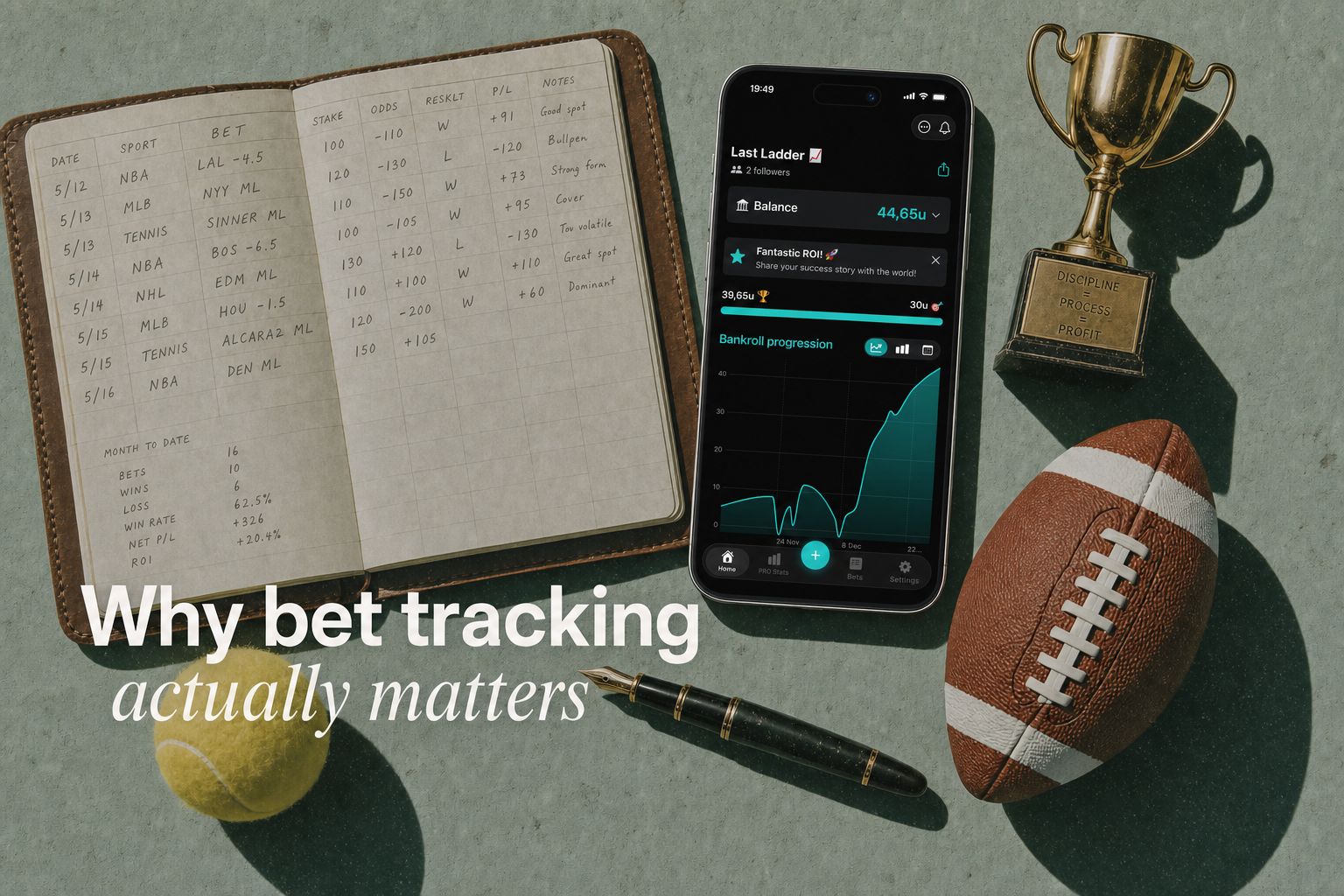
Ask a bettor how last night went and you get a story. Ask which sport paid them last quarter and most go quiet. That gap is the whole case for bet tracking.
You log each wager: stake, odds, market, result. Then you can measure what happened instead of reconstructing it from memory. Serious bettors do this so they can cut losers, protect a bankroll, and stop funding habits that only feel profitable.
1. Your memory runs a highlight reel
You remember the screaming winner and the late equaliser that wrecked a parlay. You forget the forty flat bets in between. Wins swell. Losses get a tidy explanation. Near-miss parlays turn into "should have won."
A full log keeps units won and lost by sport, market, and odds range. Put that next to the story you tell yourself and the mismatch shows up fast.
2. Your "best" sport may be the one bleeding you
Most people have a league they feel sharp in. The numbers often disagree. NFL can feel like home while still costing units. Tennis or a lower football league can carry the bankroll without the drama.
Once you have enough volume, dig into what bet tracking data reveals. You start putting time and stake where the record pays, not where the gut insists.
3. Tilt shows up on a calendar
Chasing, doubling after a bad beat, grabbing a random live bet to "get it back." In the moment those moves feel reasonable. Across a week they flatten ROI.
A tracker makes the pattern visible: loss clusters, stake spikes after downswings, markets you only touch when you are already tilted. Seeing it is the first step to cutting it.
4. Balance is not the same as process
Knowing how much is in the account does not tell you if you are growing, flat, or leaking every weekend. Logging ties deposits, withdrawals, and wagers into one view.
Pair that with sizing rules. Why tracking bankroll progress matters and how to build a bankroll from scratch cover the boring half of the job.
5. Reviews turn logs into decisions
If you never open the numbers, you are filing tickets. A weekly pass through bet analytics is where the habit pays: ROI by sport, bet type, and odds range, plus streaks and profit calendars. Then you cut, keep, or shrink a segment.
People who only log collect receipts. People who review change what they bet next week.
6. Small samples lie to you
Twelve winning player props feel like skill. Two hundred logged props with a clear ROI is closer to evidence. Tracking is how you know when a sample is big enough to change strategy, and when you are still guessing from a hot week.
7. You own the record
Sportsbook history screens reset, hide old tickets, or only show one book. Sync apps miss offshore, retail, and a lot of international action. A journal you control (manual entry or Magic Scanner) is the ledger that stays complete.
If sync is not available where you bet, how to track sports bets without sportsbook sync walks through the practical setup.
A good week of tracking tells you what to stop betting next week.
Keep the setup small
Log the bet when you place it. Stake, odds, market, book. Ten minutes on Sunday. Cut one losing segment. Repeat.
If you are starting from zero, use bet tracking for beginners. When the sample grows, how bet tracking improves ROI covers the review loop.
Bet Journal is free to start on iOS and web, with Magic Scanner and bet analytics when you want less typing and clearer breakdowns.
Track smarter with Bet Journal.
Free bet tracking app with Magic Scanner and bet analytics.