
Sports betting journal: what to write down after every bet
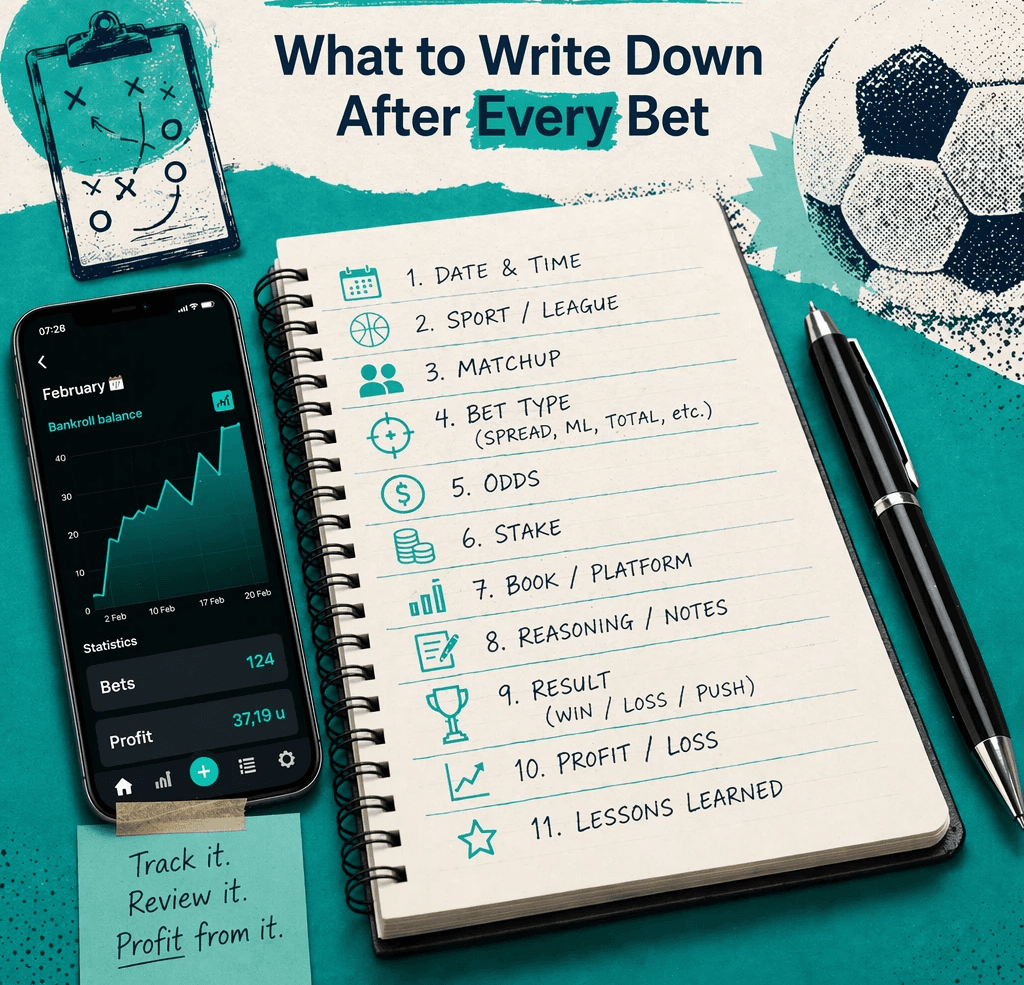
A logged bet is only useful if you capture the right details. Here are the seven things that turn a wager into a lesson you can actually learn from.
Most bettors track the wrong thing. They write down whether they won or lost, and nothing else. Six months later they have a column of pluses and minuses that tells them how they did, but nothing about why.
A real betting journal isn't a scoreboard. It's a feedback loop. The point isn't to relive the win or sulk over the bad beat, it's to capture enough context that, weeks from now, you can spot the patterns hiding in plain sight: the markets where you actually have an edge, the situations where you reliably talk yourself into bad numbers, the bet types quietly bleeding your roll.
Why the right details matter
Your memory is a liar. It remembers the dramatic winner and the gut-wrenching loss, and quietly forgets the forty unremarkable bets in between, which is exactly where the truth of your betting lives. Writing things down in the moment, before the result is known, is the only way to separate good decisions from good luck.
Track the decision, not just the outcome. A good bet that loses is still a good bet, and your journal is the only place that distinction survives.
The seven things to log after every bet
You don't need a spreadsheet with forty columns. You need these seven, captured consistently, every single time.
- Stake and odds. The amount risked and the price you got, in units as well as money. Units keep months comparable even as your bankroll grows.
- Market and selection. Not just "Lakers", the full picture: moneyline, spread, total, prop, the line and the book. Your edge usually lives in a specific market, not a team.
- Your reasoning. One sentence on why you placed it. "Sharp line move," "model edge," "gut feel on a revenge spot." This is the single most valuable field, and the one everyone skips.
- The closing line. Where the number landed at kickoff. Beating the close consistently is the clearest sign you're betting with a real edge rather than running hot.
- Result and payout. Win, loss, push or void, and the actual units returned. One tap, but it keeps your bankroll honest to the unit.
- Confidence and emotion. How sure were you, and what kind of mood placed the bet? Tilt, boredom and chasing all leave fingerprints you can only see in hindsight.
- A tag or two. "Live bet," "parlay leg," "model," "fade the public." Tags are what let you slice the data later and ask sharper questions.
Turn your notes into a weekly review
Logging is only half the habit. Once a week, Sunday night works well, sit with your journal for ten minutes and actually read it back. You're not looking at the profit number. You're looking for patterns.
- Which markets and sports are green over a meaningful sample, and which only feel profitable?
- Where did your reasoning hold up, and where were you clearly rationalizing a bet you wanted to make anyway?
- Are your worst results clustered around certain moods, times of day or bet types? That's a leak you can close this week.
You can't fix what you never wrote down. The bettors who improve aren't the ones with the best reads, they're the ones who review.A lesson every PRO member learns fast
Let the app do the heavy lifting
The reason most journals die is friction. If logging a bet takes three minutes and a spreadsheet, you'll skip it on exactly the nights that matter. That's the whole idea behind Bet Journal's Magic Scanner, snap your bet slip and the AI reads the stake, odds and market for you, so the only thing left to add is the part no spreadsheet can capture: your reasoning.
Do that consistently, and in a season you won't just know whether you're up. You'll know exactly why, and what to do more of.
Start your own betting journal.
Track every bet, capture your reasoning and let the Magic Scanner handle the typing. Free to start.